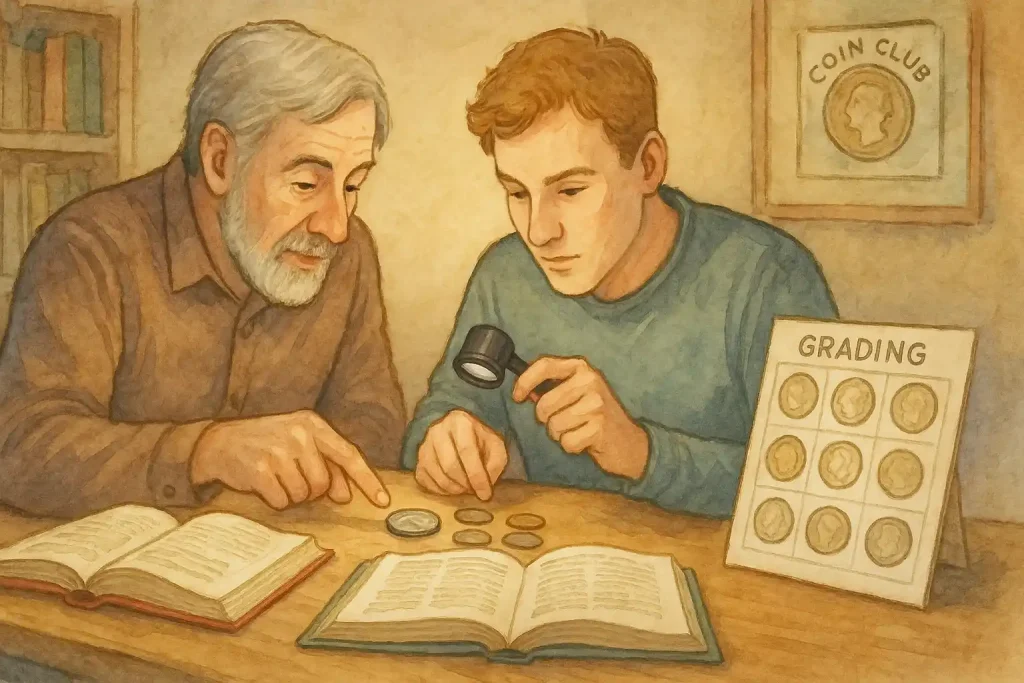
Building numismatic knowledge from scratch becomes far easier once you follow a structured path. New collectors often jump between videos, books, and random forums, which creates confusion. A clear foundation removes that problem and turns scattered facts into steady progress. Start with terminology, coin identification basics, and valuation factors, then expand toward deeper research tools and real-world practice.
Start With Trusted Free Online Courses
Begin with accessible, well-structured lessons. The American Numismatic Association provides the strongest free entry point thanks to detailed video modules created by experienced educators.
Recommended ANA Courses
- Coin Collecting Basics
Introduces types of coins, storage principles, metal characteristics, and valuation elements. - Learn How to Grade Your Own Coins
Breaks down the Sheldon Scale, surface conditions, strike quality, and eye appeal through practical examples. - Youth and Beginner Webinars
Short sessions covering topics such as errors, mintmarks, and safe handling.
All materials are available free at ANA’s eLearning Academy. Lessons are self-paced and ideal for forming early collecting goals without financial pressure.
Build a Core Reference Library
Books remain essential because they offer structured information, reliable definitions, and consistent grading examples. A small collection under $50 can already support serious growth.
Starter Book List
| Title | Purpose | Why It Matters |
| Red Book (A Guide Book of United States Coins) | Annual price guide with varieties, mintage, and history | Helps you understand market patterns across decades |
| ANA Numismatic Bibliography | Index of research references | Useful for exploring specialized fields |
| Coins101 Grading & Error Booklets | Simple visual guides | Ideal for early hands-on training |
Most clubs lend beginner references at no cost, giving you a low-risk and low-cost way to learn before purchasing your own materials.
Join Collecting Communities Early
Connecting with experienced collectors accelerates learning more than any solo study. Clubs, online groups, and industry seminars expose beginners to rare coins, grading demonstrations, and market behavior.
Communities That Strengthen Learning
- Local ANA chapters: mentoring, workshops, and show-and-tell sessions.
- Coin clubs: group trips to mints and museums, seasonal talks, and access to lending libraries.
- Online events: Greysheet webinars on pricing trends and live “Discovering Your Coin” samplers that teach how auction specialists assess value.
These interactions help beginners understand subtle grading points—something books alone cannot fully teach.
Practice Immediately With Real Coins
Numismatics becomes intuitive only when theory meets hands-on practice. Even a small batch of inexpensive world coins provides endless study material.
Steps for Practical Training
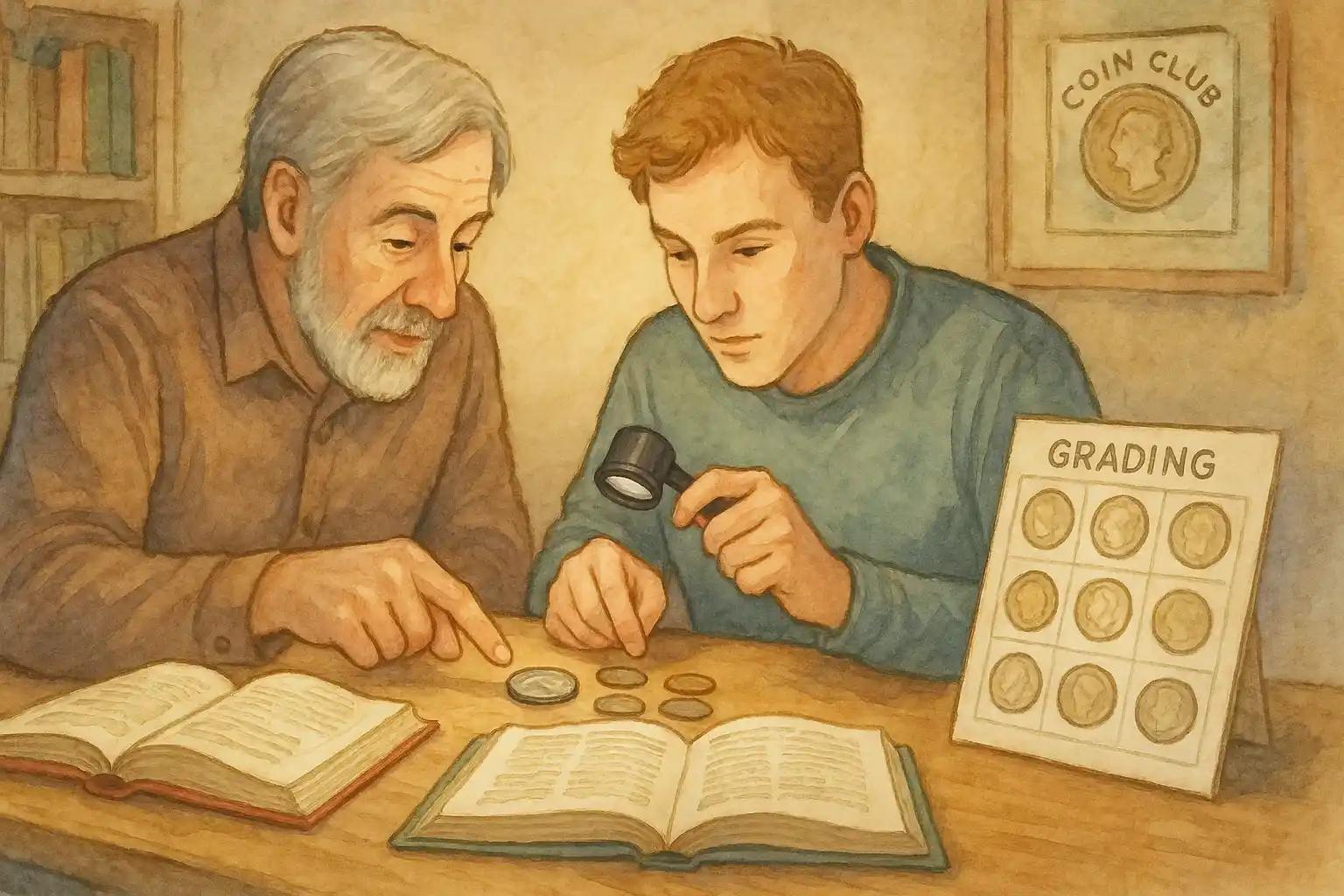
- Inspect coins under a loupe and note wear patterns.
- Compare luster, strike strength, and surface marks.
- Record findings in a notebook to track progress.
- Re-evaluate coins after studying new grading modules.
Tip for Tech Enjoyers: Digital tools enhance this stage. The coin scanner app offers photo-based identification on Android and iOS. Upload or snap a picture—its database displays mint years, country, composition, diameter, weight, and value. Collection management features allow you to catalogue training coins and observe patterns across global types.
Strengthen Your Grading Skills Through Structured Comparison
Once you understand terminology, grading foundations, and basic identification, the next step is to build fluency. Intermediate numismatic skills focus on pattern recognition, valuation logic, and consistent practice with verified references. This stage transforms passive learning into active judgment — the point where you begin to identify quality, rarity, and market movement with confidence.
Grading is the core of numismatic value. Beginners often rely on instinct, but accuracy develops through repeated comparison.
Practical Grading Routine
- Group your coins by denomination or series.
- Compare each piece to grading photos in your books.
- Examine luster breaks, contact marks, and strike strength.
- Revisit earlier grades after a week; note changes in your assessment.
A consistent routine reveals how small details influence value. Tracking your reasoning in a notebook or keeping a log in the free coin identifier app reinforces long-term skill development and helps you avoid common grading mistakes.
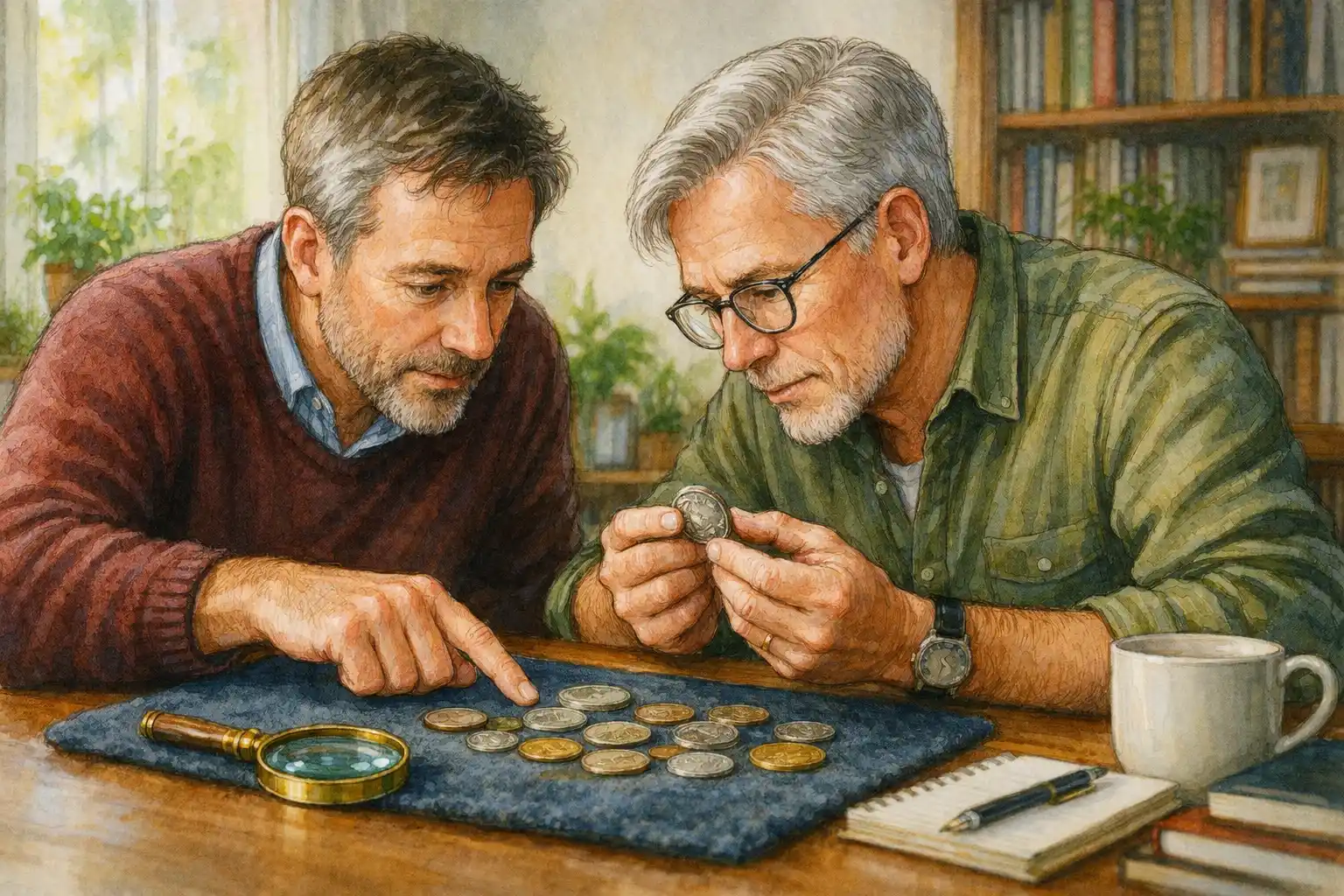
Use Research Platforms That Offer Verified Market Data
Intermediate collectors must understand the relationship between rarity, demand, and historical pricing. Several online tools provide this data in clear, research-friendly formats.
Key Research Resources
- PCGS CoinFacts: population data, survival estimates, die varieties, and certified price charts.
- NGC Census: grading population reports for every certified grade level.
- Auction archives: visual comparisons of hammer prices over time.
- Oxford Numismatics LibGuide: curated academic references for those exploring deeper historical context.
Regularly checking population reports reveals why two coins of the same date and mintmark can differ dramatically in value. Tracking auction results clarifies long-term pricing trends, helping you judge when a coin is fairly priced.
Compare World Coins to Broaden Understanding
Working only with one country’s currency can limit your perspective. World coins introduce new alloys, minting styles, script systems, and production methods.
Benefits of Studying Global Types
- Expands familiarity with metals beyond copper and nickel.
- Trains your eye to notice differences in strike quality between mints.
- Increases awareness of international grading norms.
- Helps you understand how age and wear vary across climates and circulation patterns.
This broader exposure strengthens your ability to analyze any coin you encounter — a key marker of intermediate numismatic competence.
Learn How the Market Reacts to Trends
Coins follow predictable cycles based on collector interest, supply releases, and generational shifts. Observing these patterns early helps you think like an analyst rather than a casual buyer.
Simple Ways to Track Trends
- Review monthly price updates in respected guides.
- Compare mintage numbers to real survival estimates.
- Monitor which series attract new collectors in forums and clubs.
- Follow grading submissions to see which coins receive increased attention.
Over time, you begin to see how popularity, rarity, and quality interact — knowledge that lays the groundwork for advanced collecting decisions.
Develop a Systematic Research Habit
Experienced collectors rely on structured research rather than intuition. Setting aside weekly time for study keeps your knowledge sharp and helps you spot developments before the market reacts.
Elements of a Strong Research Routine
- Review population updates and certification trends.
- Compare price movements over several years, not just the current market.
- Analyze how changes in collector demographics influence demand.
- Track series-specific patterns such as improved grading submissions or new variety discoveries.
A consistent rhythm gives you perspective. Instead of reacting to short-term excitement, you rely on real data to guide your decisions.
Study Error Varieties and Strike Diagnostics
Advanced numismatics requires understanding how coins are made — and how production flaws appear. This field strengthens your grading accuracy and valuation skills, as errors often command strong premiums when verified.
Key Areas to Explore
- Die varieties: doubled dies, repunched mintmarks, and rotated reverses.
- Planchet flaws: laminations, clips, and wrong-metal strikes.
- Strike anomalies: weak strikes, off-centers, and misalignments.
- Design diagnostics: small shifts in relief or letter spacing.
Analyzing these features teaches you to see details casual collectors overlook. It also improves your ability to verify authenticity and avoid questionable items.
Build a Teaching Mindset to Reinforce Your Knowledge
Sharing insights with others — through club talks, forum posts, or grading comparisons — is one of the fastest ways to grow. Teaching forces clarity, reduces bias, and exposes blind spots in your understanding.
Ways to Strengthen Skills Through Teaching
- Participate in club mentoring programs.
- Help beginners grade inexpensive coins.
- Post comparison photos in online groups.
- Contribute to community research threads.
Each interaction reinforces what you know and expands your analytical range.
Organize Your Collection for Long-Term Learning
A well-structured collection acts as a personal reference library. Instead of storing coins randomly, organize them by type, grade, series, or metal.
Practical Organization Methods
- Use labeled flips and archival pages.
- Keep notes on where and when each coin was acquired.
- Maintain a digital catalogue for tracking grades, metals, and market changes.
- Compare your coins regularly to updated standards.
Digital tools support this process. A numismatic app such as Coin ID Scanner can store coin photos, specifications, and value data, helping you build a coherent, searchable database that evolves with your experience.
Adopt a Long-Term Mindset
Numismatics rewards collectors who view learning as an ongoing craft. Expertise develops gradually through exposure, comparison, and structured inquiry.
Principles for Sustainable Growth
- Keep studying even when you feel comfortable.
- Revisit earlier coins with your improved skills.
- Explore new historical periods or world regions.
- Engage in communities that challenge your perspective.
- Stay open to new tools, technologies, and research methods.
By combining foundational theory, intermediate analysis, and advanced study habits, you create a balanced learning system that strengthens with every coin you examine.